FREEMASONS AND FREEMASONRY
What Do Freemasons Believe In?
Historically, Freemasons are builders.
True Freemasons are respectful and tolerant of the opinions and religions of others.
They are taught to practice charity toward those who are less fortunate, not only by monetary gifts, but by their personal and united voluntary efforts.
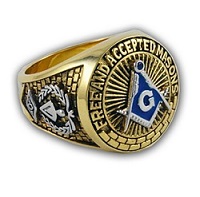
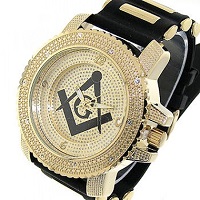
They strive for truth. Freemasonry's logo, the Square and
Compasses, is a visual reminder of the brotherhood of man (the Square which
points downward toward mankind) under the Fatherhood of God (the Compasses which point upward toward the heavens.)
As such, moral rectitude,
spiritual values and the necessity of living a life which is pleasing to the
Grand Architect of the Universe makes good men, better.
Organizational Structure
Freemasonry is a global fraternity of men who believe in the brotherhood of Man under the Fatherhood of God.
As such, Freemasons strive to uphold moral character and spiritual values in their interactions with other Freemasons, as well as with non-Freemasons.
How many men are members of the fraternity?
Over 6,000,000, worldwide.
How old is Freemasonry?
Written documentation shows that Freemasonry is the oldest and largest existing fraternal organization in the world.
Does Freemasonry Have An
International Headquarters?
No. No one person can "speak" for Freemasonry, as a whole.
What is a Freemason Grand Lodge?
A "Grand Lodge", or "Grand Orient", is the governing body of Freemason subordinate lodges in a specific geographical area, which is called a jurisdiction.
Are the locations of Grand Lodges around the world a secret?
No. See this list of
World Grand Lodges. Their contact information as well as a list of
subordinate lodges may be found on their
individual websites.
Masonic Lodges
What is a Masonic lodge?
Even though people refer to a lodge as a place where lodge meetings are held and degrees are conferred, a lodge is wholly made up of its members.
The members, themselves, constitute the lodge because without members, the lodge is simply a building or place where a lodge of Freemasons meet.
How often do Masonic lodges hold meetings?
Most lodges in the United States meet twice per month. Meetings are typically held in the evening, after members leave their daytime employment for the day, however, there are a few lodges which meet during the daytime to accommodate those members whose employment requires them to work the 3rd or night-time shift. These are called "Daylight" Lodges.
How many degrees are conferred in a Masonic lodge?
Three.
- Entered Apprentice degree
- Fellowcraft degree
- Master Mason degree
There are corresponding Masonic degree verses for each of the three degrees.
Lodge Officers
Each lodge around the world has lodge officers. There
are slight differences in lodge officer titles and job descriptions around the
world.
These are the specific
Lodge Officer duties for lodges in the United States.
History of the Freemasons
In 1717, the first Grand Lodge of England was formed when four
existing Masonic lodges merged together. Soon, a regulatory body was
formed, which most of the Masonic lodges in England. joined.
During this same
time, a few lodges chose to start their own Grand Lodge, which was named the 'Antient
Grand Lodge of England'. The two Grand Lodges competed to become the supreme Grand
Lodge until in 1813, they agreed to unite to become the United Grand Lodge of
England or U.G.L.E.. Afterward, Freemasonry spread across the globe, and within a
few years, Grand Lodges were also formed in other countries.
Grand Lodge Inception Dates of the Formation of the first
Grand Lodges
(Via a Grand Lodge warrant, Henry Price was made the Provincial Grand Master
of New England.)
First Grand Lodge - 1717 - The actual origin of Freemasonry is unknown because previous to 1717, when the 4 lodges in London merged together to form the first Grand Lodge of England, recorded documents are scarce.
Therefore, after 1717, recorded Masonic documents are more complete. Many Masonic scholars theorize that the fraternity began with the stonemasons' guilds during the Middle Ages. These guilds were similar to trade unions.
Oldest Masonic Document
1390 - The oldest known document which refers to (stone) "Masons" is the Regius Poem of 1390 A.D.. However, within the Regius Poem, reference is made to an earlier work which has never been found.
Old Charges
Referred to as the Old Charges, these old manuscripts which are written in "Olde Englishe", form the foundation of subsequent Masonic charters. They are also known as the old Masonic constitutions, and are the basis for Masonic jurisprudence, yet today.
Masonic Rituals
Much of the archaic (old) language within the rituals is not commonly used in the English language, today. Many of Freemasonry's symbols, too, which are used within the rituals, are more than 200 years old. With a better understanding of Masonic words, the meanings of the rituals become easier to understand.
Freemasonry soon spread throughout Europe and was brought to the American colonies.
Famous Colonial Freemasons
Many of the now famous names in colonial America, such as George Washington, Benjamin Franklin, Paul Revere, John Hancock, Lafayette, John Paul Jones, and many others were Freemasons who were instrumental in the founding and building of America.
What Principles Were Important to Freemasons, Then and Now?
- Self-improvement through study
- Social equality
- Individual liberty
- Religious freedom
- Democratic government
- Public schooling for all
- Philanthropy and Volunteerism
Masonic Charities
Previous to the inception of Social Security in the United States, the U.S. government did not offer any form of social "security" to people who were in need.
From the early 1800s, the Masonic fraternity provided Masonic relief in the form of orphanages for homeless children, homes for widows and the elderly, as well as many other relief-based programs to insure the people's welfare.
Today, in North America, this tradition continues. Through their voluntary efforts, collectively the Freemason fraternity and its appendant bodies give approximately 1.5 million dollars each day (over $ 500 million dollars a year) to charitable causes such as the operation of children's hospitals, childhood language disorder treatment, eye disease treatment, the funding of medical research, local community service.
The fraternity also supports Masons and their families who are no longer able to support themselves through a support network of Masonic Homes in several U.S. states for Masons and their families who are no longer able to support themselves.
Worldwide, Freemasons are believers in high ideals, brotherhood between all men, and are builders of a better future for all mankind.
Speculative vs. Operative Freemasonry
Why are they called "Free" Masons?
Much of the large Gothic, stone architecture found all over Europe was built between the years 960 A.D. through 1700 A.D..
Common (stone) Masons
Common masons, at the time, were typically indentured to patrons such as the King, a Bishop or a Pope. Thus, they were not free to travel to other cities, at will, to apply their trade.
Common masons built simple-to-create buildings and did a lot of "flat work" using trowels and mortar, such as brick walls, where knowledge of the sciences of mathematics, geometry and higher learning was not as intrinsically necessary to their application of their craft.
Free (stone) Masons
Historically, "free" masons were highly skilled and highly specialized stone mason craftsmen and artisans who used their working tools to craft the artistically detailed and ornate Gothic architecture and carvings found in many of the cathedrals and other large edifices (buildings) in Europe during the Middle Ages in the 1400s and 1500s, as well as before and after that time.
Due to the knowledge and skill of these master mason architects, who were called "free" masons, many of these buildings have not only survived for several hundreds of years, but many are still in use, today.
Due to the scarcity in the numbers of these highly trained
"free" master masons, they were not indentured to any one specific patron.
They were free to travel to different cities, at will, to apply their trade.
Masonic Symbols
Why Does Freemasonry have Freemason Symbols?
The job description for operative "free" master mason artisans did not end with learning how to craft stone.
By necessity, it also required them to master the Liberal Arts and Sciences, which are Grammar, Rhetoric, Logic, Arithmetic, Geometry, Music and Astronomy.
These master craftsmanship carved complicated and highly detailed stone artwork, frescoes, and lettering. Their knowledge of the blend between stone architecture and art can be seen and felt, even today as we view these massive churches with their soaring cathedral ceilings.
The ability to understand the meaning of and be able to carve symbols into stone was intrinsic to their craft.
What is a Freemason Emblem?
Freemasonry's emblem, or logo, is the
square and compasses. The square and compasses are the symbolic tools
of a speculative Master Mason. Within Freemasonry's many appendant bodies,
there are numerous
Masonic emblems and
Masonic
Symbols.
Operative Free Masons Architecture
Breathtakingly Magnificent Free Mason Architecture
Westminster Abbey - One such cathedral is the famed Westminster Abbey, in Westminster, London, which was founded in the year 960 A.D., a breathtakingly magnificent example of free mason artisan and craftsmanship.
For over 1,000 years, it has been the location of ceremonial coronations, weddings and burials of English kings and queens, as well as the resting place of famous poets and statesmen. Since 1919, it has hosted 16 royal weddings.
- Westminster Abbey is a part of the Church of England and
possibly the most famous Christian church in existence.
- It has been the chosen church for royal coronations in England since 1066.
Roslyn Chapel
Another architectural work of art
built by "free" masons is Roslyn Chapel in Roslin, Midlothian, Scotland.
Originally built by William St. Clair, Third Prince of Orkney in 1446, and
made world famous with the publishing of Dan Brown's book, The Davinci Code,
in 2004 and the film version, in 2006, Roslyn Chapel, today is open to the
public.
Why are Freemasons called
"Master" Masons?
Each operative (stone) mason aspired to the title of being called a Master Mason because the skills of these specially trained, professional builders were much sought after. Each aspiring mason underwent rigorous training which lasted for many years.
When the Master Architect felt these mason's skills were highly honed, he requested that they create their "Master's piece". If the Master's piece met with the Master Architect's satisfaction, the title of "Master Mason" was bestowed upon them.
These men created architectural, artistic works of art such as hand-carved arches of stone, precision hand-cut keystones at the top of each arch, and inlaid stone floors, wherein each stone was cut, sized and fitted with such geometrical precision that no mortar was needed.
Today, hundreds of years later, these floors are still in use.
Craft, Allegory and Ritual
Why does the fraternity call itself the "craft"?
To craft something is to build it. Freemasonry helps good men become better men through personal growth. The craft of Freemasonry is a system of morality, constructed by the use of Freemason symbols which are taught through the use of allegory and ritual.
What is allegory?
Allegory is a means of representation which conveys a message by the use of symbolic figures, or actions. Rituals are in the form of a play, with cast members. This helps members of the fraternity to understand the message, both verbally and visually.
What is a Freemason ritual?
A ritual is a ceremony which is repeatedly performed in the same manner each time.
Do Freemason rituals involve sacrifice or blood in any way?
No.
Operative vs. Speculative Freemasons
What is the difference between operative and speculative Freemasons?
Freemasons, today, are called "speculative" Masons because most of them do not operatively work in the craft of building large stone buildings.
Physical Trestleboard
Operative freemasons used an architectural plan called a trestleboard, which is somewhat akin to what we might call an architectural "blueprint", today. It was created by their supervisor, the Master Architect, to guide them in laying the foundation and structure of the Gothic cathedrals and abbeys (churches) in Europe.
Symbolic Trestleboard
Speculative Freemasons use the Volume of Sacred Law as their symbolic, foundational blueprint to build a moral and spiritual life which is pleasing to the Supreme Architect of the Universe (God).
Why do Freemasons use the terms Supreme Being, Architect of the Universe, Grand Architect of the Universe, etc., instead of using the word "God"?
There is only one Supreme Being. Around the world, there are many names for the Creator of the Universe. Freemasonry attempts to bring men together in brotherhood with one another, rather than exclude a man solely based upon the name he uses to denote Deity.
Religion
Is Freemasonry a religion?
No. Freemasonry universally embraces men from all religions. Freemasonry has no specific religious dogmas, (established beliefs or doctrines which are denomination-specific within different religions), does not teach theology, does not offer sacraments and does not offer the promise of salvation.
The fraternity encourages and brings men together in brotherhood, to simply focus upon the Supreme Being, the creator of mankind (God).
Does Freemasonry attempt to change a man's personal religion?
No. Freemasonry believes in and universally upholds religious freedom for all men. It believes that a man's relationship with God is undisputedly, a private and very individual relationship which is sacred in nature.
In order to maintain a spirit of universal brotherhood and provide harmony within the lodge, both politics and individual religions are discouraged from being discussed.
Why is there a Masonic altar in each lodge room?
One of the requirements to become a Freemason is that each man must have a belief in a Supreme Being (with the exception of the Grand Orient de France).
Which Volumes of the Sacred Law reside(s) on the altar?
Typically, for Protestant, Christian members in English speaking countries, the King James version of the Christian Bible or another standardized translation, resides upon the altar.
However, depending upon the personal religious beliefs of the lodge members, holy books of other major religions may also be placed upon the altar when the obligation is conferred upon the candidate, such as the Torah, (also known as the Hebrew Bible) for Jewish members. (The Torah contains the first 5 books of Moses: Genesis, Exodus, Leviticus, Numbers and Deuteronomy).
Volumes of the Sacred Law from other major religions for those members who are of other faiths, such as Islam, Sikhism and Hinduism may also be found upon the lodge altars around the world at the time the candidate takes his obligation.
Are prayers performed in the lodge rooms?
Yes. Non-denominational prayers are performed before and after the lodge
meets and before refreshments are offered. This means that prayers are offered to the Grand
Architect of the Universe, rather than to specific religious figures such as
Jesus Christ, Muhammad, Buddha or others.
Non-denominational prayers are not meant to exclude these specific religious
figures from a man's personal beliefs, but are, instead, directed to God, to provide members from all
religious faiths a common ground upon which to find brotherhood.
Secrets
Does Freemasonry have secrets?
Yes.
What are the Freemasons Secrets?
The passwords, grips, steps, penal signs and the wording of the rituals.
- What are passwords?
-
A form of recognition between members.
- What are grips?
-
A second form of recognition between members.
- What are penal signs?
-
A third form of recognition between members.
Is Freemasonry a Secret Society?
No.
Worldwide, Freemasonry has varying degrees of secrecy. In
English-speaking countries, affiliation with the fraternity is public.
Masonic buildings are usually clearly marked, many lodges are listed in the telephone books or can be found online, and meeting times are generally a matter of public record or may be found on lodge websites.
In other countries, where Freemasonry is suppressed by governments, higher degrees of secrecy may be practiced.
What Do Freemasons "DO?"
Freemasons promote
voluntary and charitable efforts:
- Charity - Collectively, Freemasons fund Masonic homes for the elderly and fund programs which assist in child welfare. Locally, lodges hold charity events which provide scholarship funds for youth as well as funding for other worthy local charitable causes.
-
Education - Freemasons provide college scholarships to worthy
young men and women, for both members of the fraternity and non-members.
To find more information about Masonic scholarships, go to the World Grand Lodges page, click on your state or country and, once on the Grand Lodge website for your jurisdiction, search for the details about the Masonic scholarships which are available.
-
Volunteer Support - Freemasons contribute to blood banks, the funding of
medical research and support and maintenance of hospitals for crippled and
burned children in the United States, Canada and in Mexico.
Freemasons in North America, alone, give over 1.5 million dollars each day to charities.
-
Masonic Child Identification Programs (CHIP) -
Working hand-in-hand with law enforcement officials, in the United States,
Freemasons offer free child identification kits (physical description, photos,
fingerprints, tooth prints, and DNA sample,...video and audio are also offered
in some locations) to children under the age of 18 years old.
These child ID kits are compiled by volunteers at CHIPS events held in many different cities. CHIP events are open to the public.
Should a child be abducted, time is of the essence. Parents can immediately give this CD or DVD with their child's full information to law enforcement officials.
When each child identification event ends, and the child's parents are in possession of the CD or DVD, all personal data on the computer hard drives used to produce these CDs are erased.
The fraternity keeps no copy nor any personal data about the child, whatsoever. Parents are advised to keep their child's CD/DVD identification information in a safe place because the fraternity does not keep a back-up copy.
Concordant and Appendant Bodies
What is a Freemason appendant body? Are they a part of the fraternity?
In addition to lodge membership, Freemasonry has a diverse number of organizations which also contribute their charitable efforts to local communities. Each of these organizations consist of Master Masons and their families.
To become a member of any of these organizations, a man must first join a lodge and become a Master Mason.
There is no higher degree in all of Freemasonry than that of a Master Mason. Each of these subsequent degrees explain the meanings of the first 3 degrees in greater depth.
There are numerous appendant bodies within Freemasonry. These are the 3 primary appendant body Masonic organizations in the United States:
-
Ancient and Accepted Scottish Rite of Freemasonry -
The Scottish Rite is also known as the "University of Freemasonry"
because it offers an additional 29 degrees, all of which build on the first 3
degrees which are received in the Masonic lodge.
The culmination of these degrees is the 32nd degree of the Scottish Rite. The 33rd degree is an elected degree which is conferred upon a select few members who have made major contributions to society or to the fraternity.
For a more detailed explanation of the Scottish Rite, see their website at ScottishRite.org
-
York Rite - The York Rite consists of 3 bodies:
Royal Arch Chapter, Council of Cryptic Masons-Royal and Select Masters and the
Commandery of Knights Templar. Colloquially, they are known as Chapter,
Council and Commandery.
All Knights Templar must profess a belief in Christ. Each of these 3 bodies offer additional explanation of the meanings of the first 3 degrees.
For a more detailed explanation about the York Rite, its degrees and its similarities and differences across the world, see their website at YorkRite.org.
What are Rites?
A Rite is a series of progressive degrees which are conferred by various Masonic organizations.
Each of these appendant bodies of Freemasonry operate separately and each body is under the control of its own central authority.
-
Ancient Arabic Order of the Nobles of the Mystic Shrine
- also known as "Shriners" - The A.A.O.N.M.S. or "Shrine" is a
social organization for Master Masons and their wives.
"Shriners" wear fezzes and donate their time to collecting donations for the many charities which the "Shrine" funds. They hold Shrine Circuses for children and support their local communities in a number of ways.
For more information about Shriner's International, see their website at ShrinersInternational.org
Prince Hall Masonry
In 1775, an African American named Prince Hall was initiated
into an Irish Constitution Military Lodge, along with fourteen other African Americans.
When the Military Lodge left the area, the African Americans were given the authority to meet as a Lodge, form Processions on the days of the Saints John, and conduct Masonic funerals, but were not given authority to confer degrees nor to do other Masonic work.
After applying for and obtaining a Warrant for Charter from the Grand Lodge of England in 1784, these fourteen African American individuals formed African Lodge # 459 in Boston, Massachusetts. The Worshipful Master of the lodge was Prince Hall.
Due to many difficulties such as the length of time for a Charter to be received from the Grand Lodge of England in this post-American Revolutionary War era, (the American Revolutionary War also called the War of Independence, lasted from 1775–1783), questions arose about the validity of Prince Hall Masons.
Today, Prince Hall Masonry, which is comprised almost solely of African Americans, remains as a separate entity from Mainstream Freemasonry. However, increasingly, Prince Hall Freemasonry is now becoming recognized by many Mainstream, Regular Grand Lodges and is slowly achieving full recognition from Mainstream Freemasonry.
Men who are interested in learning more about becoming a Prince Hall Mason
will find contact information about Prince Hall Grand Lodges on the
Masonic Lodge Locations page.
MASONIC MEMBERSHIP
HOW DO MEN BECOME FREEMASONS?
In the United States, a man must find a lodge near where he lives, contact the lodge, request information and, if interested in joining, he may request a petition for membership.
In most other countries, a man may be asked if he would like to join the fraternity.
There are Masonic lodge locations around the world.
OTHER REQUIREMENTS TO BECOME A FREEMASONS
Here are the requirements to
Become a Free Mason.
How much are the annual lodge dues?
Annual membership dues are usually a nominal amount, but do vary (some quite markedly) between jurisdictions.
Typically, Prince Hall Masonic dues are more expensive than traditional Mainstream Freemason lodge dues. Always request this information when you contact a lodge near you.
Women in Freemasonry
Can women become Freemasons?
Regular Freemasonry is a male-only fraternity, however, there are women Freemason organizations which offer parallel ritual to Mainstream male-only Freemasonry.
What is the Role of a Masonic Wife?
Once a man becomes a Freemason, close female relatives, his wife, daughter, mother, etc. may choose (but, it is not mandatory) to apply to and join one or more of Freemasonry's appendant, concordant, organizations such as:
-
Order of the Eastern Star - Membership is open to
both men and women, but is predominantly female. Their ritual is based
upon the 5 strong women in the Bible.
-
Co-Masonry - Membership is open to both men and
women.
Order of DeMolay
The Order of DeMolay is open to:
- Biological and adopted children
-
Half-brothers and half sisters
- Step-children
- Nieces and Nephews
- Grandchildren
- Grand nieces and nephews
- Cousins (first and second)
The Order of DeMolay is a youth organization for boys which are between the ages of 12 and 21 years old. Boys must believe in a Supreme Being and wish to work towards becoming a man of good character.
There are DeMolay Chapters throughout the United States.
Find a DeMolay Chapter near you for more information.
International Order of the
Rainbow For Girls
Job's Daughters International is a youth organization for girls which are between the ages of 10 and 20 years old. Girls must believe in a Supreme Being and want to make the world a better place.
Girls participate in fun activities and projects, such as skating, bowling, dances, and trips. helping others, charitable service and giving back to the local community.
To find a Job's Daughters Chapter near you, contact the Grand Lodge of your state or country for more information.
Find a Rainbow Girls Assembly near you for more information.
Job's Daughters International
Job's Daughters International is a youth organization for girls which are between the ages of 10 and 20 years old. Girls must believe in a Supreme Being and want to make the world a better place.
Girls participate in fun activities and projects, such as skating, bowling, dances, and trips, helping others, charitable service and giving back to the local community.
To find a Job's Daughters Chapter near you, contact the Grand Lodge of your state or country for more information.
Related Pages:
How To Become a Freemason
5 Fast Methods To Find the Information You Want to Learn About
- Search Box - Use the Search Box at the top of your page.
- Site Map - Use my Site Map page to find the topics you are most interested in.
- Carousel - Use the carousel of pages at the top of your screen.
- Menu Icon - On MOBILE, click the MENU button at the top of each page.
- Masonic Books - Browse through a selection of Masonic books.
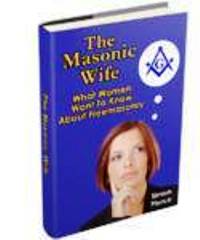
Questions and Answers About Freemasonry
The
Masonic Wife answers unspoken questions about the facts and myths surrounding Freemasonry.